
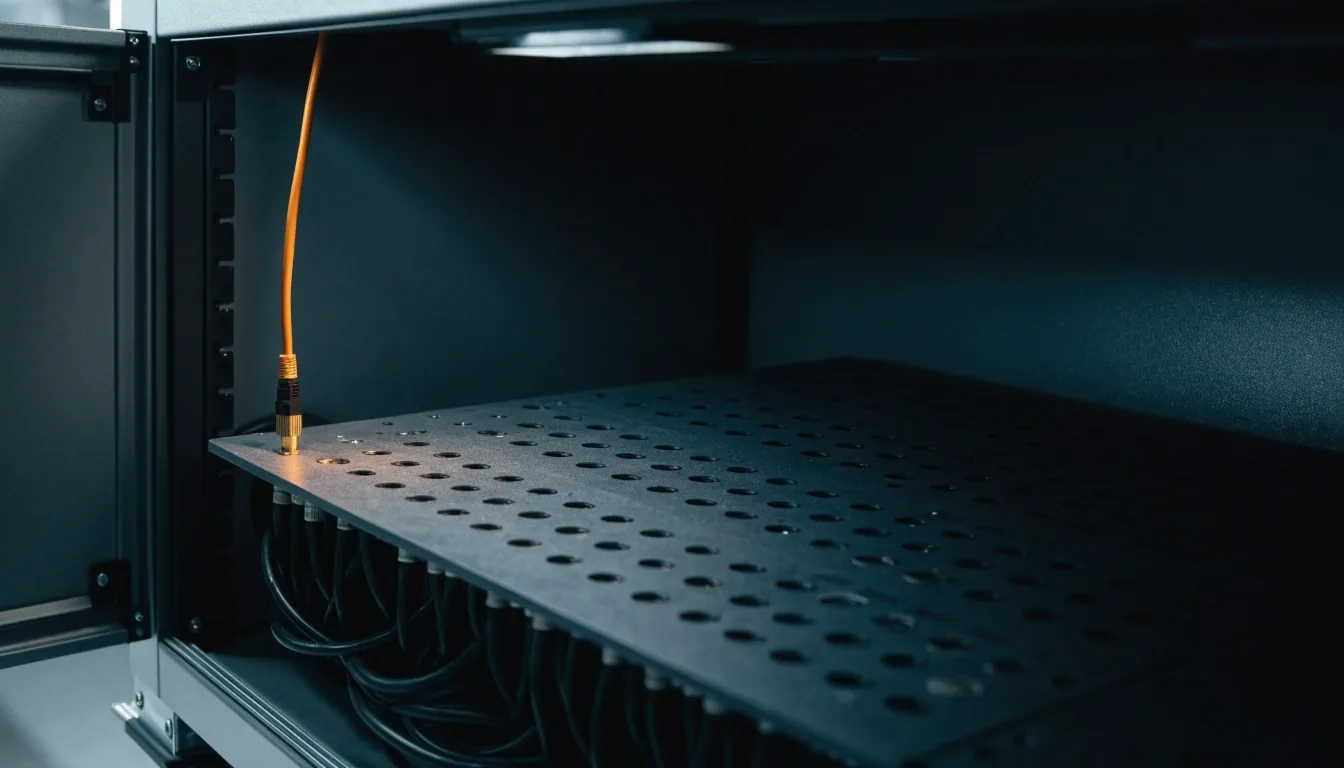
A slate patch panel inside an open service cabinet with a single amber patch cord seated in a live port, lit by cold overhead rack light.

Systems integration, London

Legacy on the left. Cloud on the right. We run the cord.

We are SOLARIS INNOVATIONS LTD. Six service lines, one join: a London switch room where regulated estates are patched by hand into hybrid cloud, then watched.

Six service lines

One join between systems

The work we do falls into six service lines. They overlap in practice, and most engagements combine two or three, but the split is useful because it tells you which conversation to start with. If you are unsure, the scoping session will sort it.

How to read this page

Each plate below is one line. A plate's connector notch is lit when the line is usually the first piece of paid work we do for a client who has the same problem.

Systems integration

The core service. We connect systems that were not built to talk to each other, whether that is an on-premise ERP and a cloud CRM, an operational technology layer and an enterprise reporting stack, or a set of internal services that have grown their own private interfaces.

The output is documented interfaces, monitored traffic, and an owner for each connection. We work in UK organisations where the estate is large enough that nobody holds the whole picture in their head.
Application modernisation

Modernisation here means changing how an application is packaged, deployed or connected, not rewriting it from scratch. That can be containerising a component, replacing a hard-coded integration with a configurable one, or moving a fragile batch process to a scheduled job with real logging attached.

Each stage is designed to be independently useful, so if the programme pauses the estate is still better than it was. We have seen too many modernisation efforts that only pay off at the end.

Hybrid cloud enablement

We design and build the split between cloud, hosted and on-premise workloads. AWS is a common destination for application hosting, data services and infrastructure scaling, and it usually sits alongside Microsoft services and private infrastructure rather than replacing them.

The design question is which interface carries traffic between environments and how that interface is monitored. Multi-cloud estates are normal; pretending they are single-cloud is where the trouble starts.

Workflow automation

Automation projects start with a count of manual steps. We look for handovers with a clear rule, automate those, and leave judgment calls with people. Scoping usually narrows a broad programme request down to two or four specific candidates, which is the right size for a first phase.

Automation that removes a well-defined handover holds up over time; automation that guesses at intent creates exceptions that someone has to manage forever.

Data interoperability

Agreeing on identifiers, ownership and update frequency at the interface level, so that reporting layers stop disagreeing with each other. This is the service that most often follows a failed dashboard project.

Data transformation and governance work often sits alongside it because analytics depends on the same plumbing. If two systems produce different numbers for the same thing, the fix is upstream of the report.

Co-managed IT

Ongoing operation of hybrid infrastructure, interface health, monitoring, patch and change coordination, and escalation paths for the systems your team does not want on its on-call rota.

This is designed for organisations with an internal team that wants specialist coverage rather than replacement. Full outsourcing is a different service and we say so when that is what a situation actually needs. The contract shape differs, and so does the way performance gets measured.

Legacy ↔ cloud

The join, at a glance

What actually gets connected, and which side of your estate usually carries the change. Read it as a shortlist aid — not as a specification.

  • Legacy estate On-premise ERP, OT layer, private interfaces Documented once, monitored always; each connection carries a named owner.
  • Cloud endpoints AWS hosting, data services, Microsoft 365 surface The interface that carries traffic between environments is a design question, not a default.
  • Reporting Dashboards, analytics, downstream exports If two systems produce different numbers for the same thing, the fix sits upstream of the report.
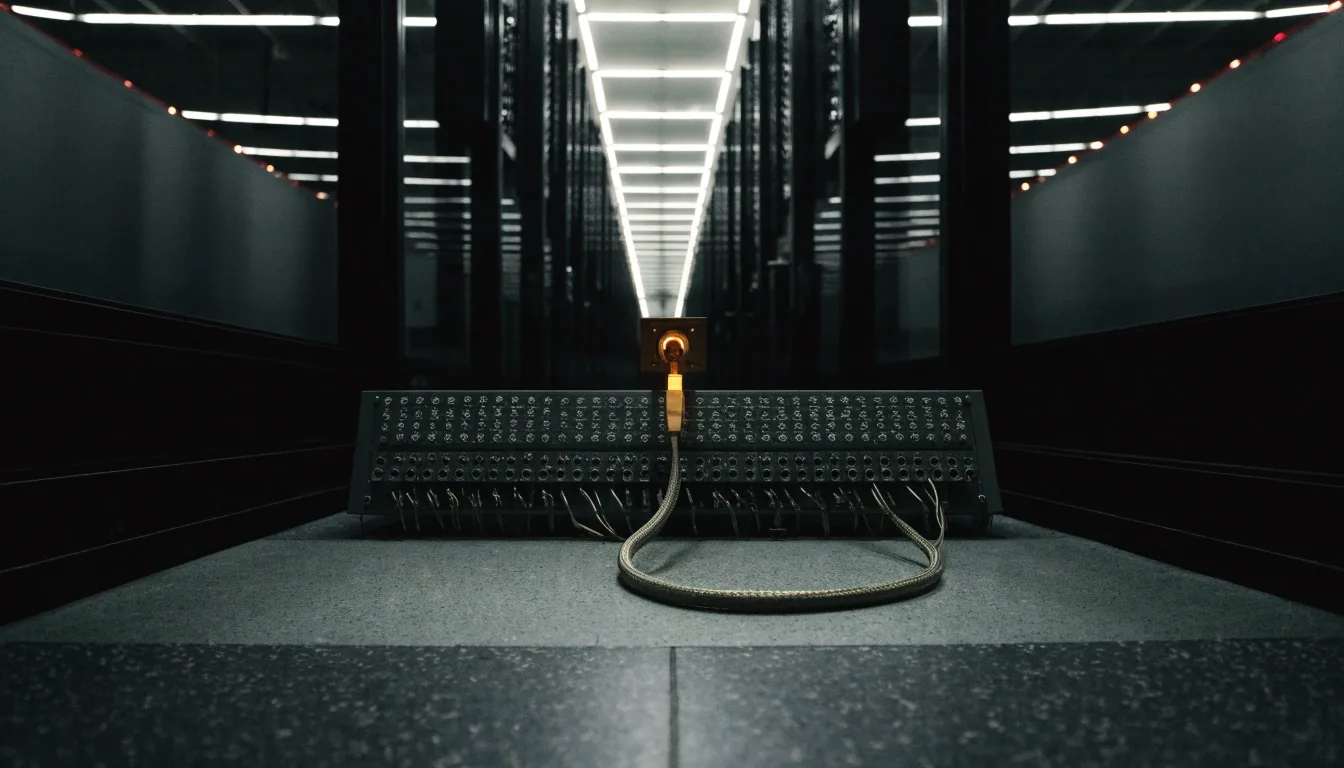
A dark rack aisle with a single amber patch cord running between two rack columns, lit from above by slotted ceiling light.
Interface health, monitoring and patch coordination are the day-to-day work behind every plate on this page.

How a service line runs

Walked step by step, not read at once

Whatever line you start with, the shape of the work is the same five moves. Some engagements stop after two. Some run all the way into co-managed operations. Each move ships something your team can use, so a pause never leaves the estate worse than it started.

Discovery and estate map

What depends on what

We walk the estate with your team and map the real boundaries — which system owns which identifier, where traffic actually crosses an environment, and which interfaces only exist in somebody's memory. Undocumented connections get written down before anything else happens.

Interface design

One join, one owner

Every connection gets a written contract: what crosses it, how often, what happens when it fails, and who to call. If the estate already carries a configuration trick nobody remembers, we replace it with a configurable version before proposing anything new.

Build and prove

Ship something useful early

Interfaces are built and monitored before they are trusted. Your operations team runs alongside ours on the first cut, because the interface is going to be theirs to keep — and a connection nobody understands is worse than the one it replaced.

Cutover

Move the cord, not the lawn

Cutovers are planned around your operating calendar: quiet windows, a rollback that has been rehearsed, and a documented list of what changes at each step. If a cutover slips, one broken handover does not require re-planning the whole programme.

Operate

Watch the join

Once it is live, interface health, patch and change coordination and escalation paths can pass to us under co-managed operations, or stay with your team. Either way, the monitored connection is the thing that tells you the estate is working.

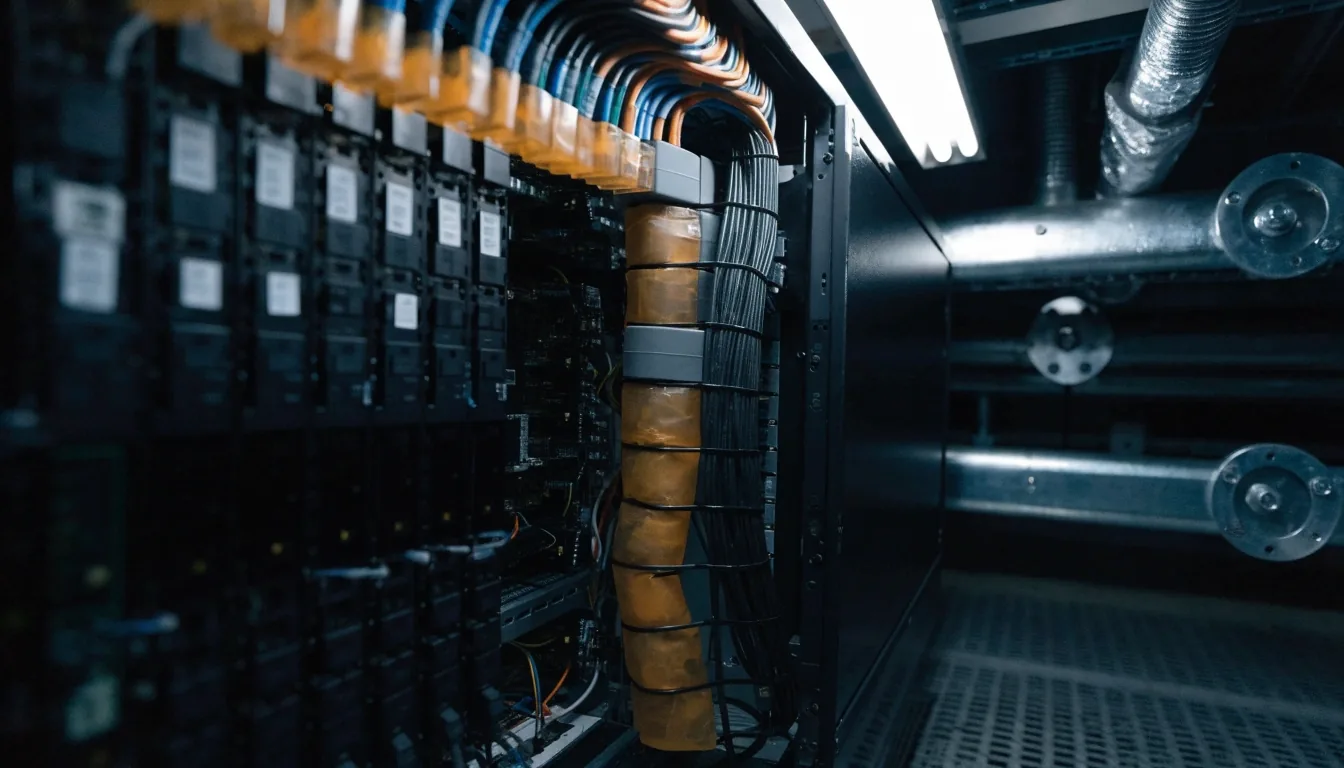
The rear of an open service cabinet showing a neatly organised cable run and cable-management fingers lit by cold overhead light.

Choosing between them

Start with the problem, not the package

Read the list to the right and pick the situation closest to yours. Where you land is the conversation to start with — a scoping session will tell you quickly if two or three of them actually apply.

You can reach the studio Monday to Friday, 09:00–18:00. Architecture review is the right first step when more than two of these are true at once.

  1. A broken handover

    Start with integration

    One specific interface keeps failing, or a handover has become the team's daily problem.

  2. A system losing support

    Start with modernisation

    An application is becoming unmaintainable, deployed by a process nobody wants to run again.

  3. Cloud move in planning

    Start with hybrid enablement

    You are planning a move and cannot decide what stays on-premise, what is hosted, and what goes to cloud.

  4. A team copying data

    Start with automation

    Someone spends their week moving the same records between two systems by hand.

  5. Reports that contradict

    Start with interoperability

    Two reports about the same thing disagree, and the last dashboard project did not fix it.

  6. Internal team at capacity

    Start with co-managed operations

    You have an internal team and a growing specialist load it does not want on its on-call rota.

  7. More than two at once

    Start with architecture review

    Several of the situations above are true and you need a sequence before a procurement.

If you are not sure which one fits, say what is breaking. The scoping session will tell you whether a service line is the right shape for the problem, or whether the right answer is a document you run yourself.